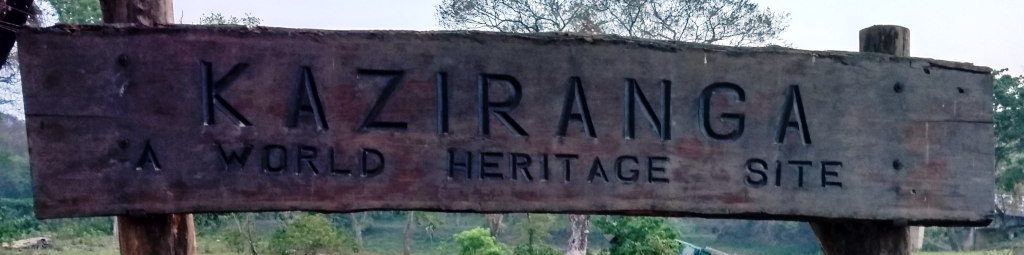
Kaziranga National Park – a Bird Watcher’s paradise
February 2026
More than 1.05 lakh waterbirds representing 107 species were recorded during the 7th waterbird estimation conducted last winter across Kaziranga National Park and the Kaziranga Tiger Reserve–Laokhowa–Burhachapori floodplain complex, officials said.
The findings reaffirm the landscape’s importance as a major wintering ground for migratory birds in the Brahmaputra valley. Authorities said the large congregation highlights the ecological significance of the Brahmaputra floodplains along the Central Asian Flyway, one of the world’s key migratory corridors.
Officials of the Kaziranga Tiger Reserve said the latest estimation underscores the region’s role as a vital refuge for both migratory and resident waterbirds. “The findings reinforce Kaziranga’s position as one of the most important wintering habitats for waterbirds and a key ecological hub along the Central Asian Flyway,” an official said.
The floodplain complex, characterised by interconnected wetlands, marshes, and riverine ecosystems, provides ideal feeding, breeding, and resting habitats for a wide range of bird species.
The survey recorded a rich diversity of bird groups, including grazing waterfowl, dabbling and diving ducks, marsh birds, waders, storks, cormorants, and fish-eating raptors. Migratory geese formed a significant share of the population, with 19,133 Bar-headed Geese and 6,533 Greylag Geese recorded.
Other abundant species included Gadwall (5,283), Green-winged Teal (5,220), Ferruginous Pochard (5,594), Lesser Whistling Duck (6,700), and Grey-headed Swamphen (6,286).
Officials noted that the total count far exceeds the 20,000-waterbird threshold under Ramsar Convention Criterion 5, reinforcing the global ecological value of the Kaziranga–Laokhowa–Burhachapori landscape.
The estimation also documented species of conservation concern, including 66 endangered Greater Adjutants and 61 Pallas’s Fish Eagles. Vulnerable Lesser Adjutants (257) and near-threatened species such as Ferruginous Pochard and Oriental Darter were also recorded.
Rowmari Beel and Donduwa Beel emerged as major congregation sites, while wetlands in the Agoratoli and Bagori ranges contributed significantly to overall bird abundance and diversity. Officials stressed the need for sustained conservation measures to protect the region’s biodiversity.
Rare bird species spotted at Kaziranga National Park
January 2026
The rare smew, a striking white diving duck, has been recorded for the first time in Kaziranga National Park during the 7th Waterbird Count. The sighting occurred at the Rowmari-Donduwa beels in the Laokhowa buffer of the Kaziranga Tiger Reserve, marking a significant ornithological milestone for the UNESCO World Heritage Site.
The smew emerged as the ‘star species’ of this year’s census, which documented over 1.05 lakh waterbirds across Kaziranga’s wetlands.
The Smew (Mergellus albellus) is a winter migrant to India from the Eurasian taiga. Males are distinctive with a black mask on a predominantly white body, while females display mottled brown plumage.
In India, sightings are rare and typically localised to northern and central wetlands. Previous records include Haiderpur in Uttar Pradesh and earlier observations around Corbett. The species favours fish-rich, sheltered waters and is usually seen singly or in small flocks.
Globally, the smew population is estimated at around 1.3 lakh mature individuals. Although considered abundant, numbers are declining due to habitat loss and removal of nesting snags.
The 7th Kaziranga Waterbird Count was conducted from January 4 to 11 using standardised protocols. More than 120 enumerators and 50 volunteers participated. The survey was compiled by the Kaziranga Park Authority in collaboration with the Assam Bird Monitoring Network.
Kaziranga National Park To reopen early for tourists for the season 2025-26
September 2025
Kaziranga National Park, usually closed from May–September for due to the annual monsoon season in Assam, will reopen early in 2025 to welcome Durga Puja tourists. This move aims to boost tourism but raises concerns about disturbing wildlife during a critical period.
As announced by the Hon. Chief Minister of Assam, Kaziranga National Park, spread across the Brahmaputra floodplains, shelters the world’s largest population of Indian one-horned rhinoceroses, along with tigers, elephants, swamp deer, and over 500 bird species. Normally shut from May to September due to monsoon floods, Kaziranga is set to reopen early in 2025, ahead of Durga Puja—a move obviously aimed at attracting festival-season tourists. The announcement came during Assam Chief Minister Himanta Biswa Sarma’s visit to Numaligarh, where he reviewed preparations for Prime Minister Narendra Modi’s scheduled inauguration of the Bio-Ethanol Plant on September 13.
This comes as a great news for all the wildlife enthusiasts who can now visit Kaziranga to spend their Durga Puja vacations and spend quality time with their families spotting the pride of Kaziranga – the Indian One Horned Rhinoceros. As per the inputs received from the authorities of Kaziranga National Park, initially the jeep safari rides will be opened to tourists at the Central and Western ranges of Kaziranga. Elephant Safari rides are scheduled to be operational from November 1st, 2025. Wishing everyone a great travel season of wildlife spotting at Kaziranga National Park
New Born elephant calf in Kaziranga named after Zubeen’s famous song “Mayabini”
October 2025
In a heartwarming moment on World Animal Day this Saturday, a newborn elephant calf at Kaziranga National Park and Tiger Reserve has been named Mayabini, inspired by Zubeen Garg’s beloved song that has become an anthem for his fans.
The female calf was born to Kuwari, one of Kaziranga’s most cherished elephants, adding new life and joy to the famed wildlife sanctuary.
Kaziranga National Park – UNESCO World Heritage Site to be expanded in area
June 2025
The Assam Cabinet, headed by Chief Minister Himanta Biswa Sarma, has approved the expansion of Kaziranga National Park and Tiger Reserve, as announced on Wednesday, June 4, 2025.
Kaziranga, which is home to an estimated 2,613 one-horned rhinoceroses and approximately 32.64 tigers per 100 sq. km, currently spans an area of 1,302 sq. km.
According to a statement from the Chief Minister’s Office, an additional 47,306.33 hectares will be incorporated as the sixth extension of the national park. “This move aims to strengthen biodiversity conservation efforts and promote sustainable tourism at the UNESCO World Heritage Site,” the statement said. It also mentioned that the Cabinet had made the decision on May 21.
The statement further clarified that ten villages will be excluded from the expansion plan. These are: Baligaon, Biswanath Ghat, Gakhirkhaite, Gonaitapu, Gopal Jarani, Hatimura, Jobre, Silghat, Thute Chapori, and Umatamoni.
Meanwhile, the Chief Minister chaired the first meeting of the Core Committee for the Centenary Celebrations of Bharat Ratna Sudhakantha Dr. Bhupen Hazarika. He stated that a biography of the music legend, currently under review, will be translated into 23 Indian languages.
The biography will be distributed to over four lakh colleges, libraries, and offices across the country, as well as to 10 lakh people in Assam.
Assam’s Kaziranga National Park suspends Jeep Safari from May 31, 2025
June 2025
The monsoon season has arrived in Assam and Kaziranga National Park will suspend jeep safari’s for the tourist season 2024-25. The elephant safari rides inside the forest reserves of Kaziranga National Park have been already shut down from May 1, 2025 for this season.
Every during the monsson season, the park gets inundated with water and officials prepare to brace the floods at Kaziranga National Park. Expected safari season will start again in October once the monsoon waters recede and the park authorities take up the repair work inside the forest reserves of Kaziranga National Park.
Kaziranga India’s 3rd most visited park for 2024-25 season:
June 2025
The Kaziranga National Park in Assam recorded its highest footfall of over 4.43 lakh tourists during 2024-25 thus becoming the third highest national park visited by tourist after Rajasthan’s Ranthambore and Periyar National Park of Kerala.
The officials of the park on Monday said the 1,300sqm national park and tiger reserve—recorded a jump of 35 per cent in inflow of tourists between October 2024 to May 2025. This includes 18,463 foreign tourists. Ranthambore and Periyar, the two tourist attractions mainly for tigers, lions and Asian elephants had seen footfall of 6.50 lakh and 7.50 lakh tourists in 2023-24 and 2016, respectively.
Although the one-horned rhinos in Kaziranga is the main attraction, the park is trying to project its “Big Five” species: rhinos, Royal Bengal tigers, Asian elephants, wild water buffalo and eastern swamp deers, to increase the attractions.
Armed poacher shot dead in Kaziranga National Park
June 2025
An armed poacher was killed by security personnel on Wednesday afternoon during a standoff near the Duramari Anti-Poaching Camp (APC) in Kaziranga National Park’s Agaratoli range.
The shootout occurred around 12.45 pm after forest authorities received intelligence about the movement of armed intruders inside the national park. In response, security teams swiftly activated anti-poaching camps and commando action groups, cordoning off exit routes and launching a combing operation.
Kaziranga, a UNESCO World Heritage Site, is home to the world’s largest population of one-horned rhinoceroses, making it a frequent target of poaching syndicates. The killing follows a series of poaching-related crackdowns in the state in recent times.
Rare Golden Tiger species spotted in Kaziranga National Park
April 2025
Kaziranga National Park in Assam, renowned for its dense population of the greater one-horned rhinoceros and a rich variety of birdlife, has added another feather to its cap — the Golden Tiger. Spotting a golden tiger in Kaziranga takes the magic of the park to another level. The dense forests and tall grasses make tiger sightings rare, which makes these new images even more special.
A rare golden tiger was recently spotted in Kaziranga National Park. Captured by a renowned wildlife photographer, the photos show the elusive golden tiger shimmering in shades of gold and cream — a striking departure from the traditional orange-and-black stripes of its Bengal cousins.
This golden tiger, which has a shiny coat and faded stripes, is not a separate species but a rare colour variant caused by a genetic mutation. First officially recorded in India in 2014, only a handful have ever been seen — making each sighting a moment of wonder for conservationists and wildlife lovers alike. Spotting one in Kaziranga is a once-in-a-lifetime opportunity for wildlife enthusiasts visiting Assam.
Elephant Safari rides resume at Kaziranga National Park
November 1st, 2024
In good news for all the wildlife lovers, Kaziranga National Park has resumed elephant safari rides for guests for the season 2024-25 from November 1st. The popular UNESCO World Heritage Site of Kaziranga now offers a range of attractions for domestic and international tourists.
A senior park official announced on Friday that, following the inauguration of the elephant safari by Minister Atul Bora, an elephant safari has been resumed in the Burapahar Range for the season 2024-25. Additionally, a new 10-km cycling route is now available in the Agaratoli Range, and the jeep safari in the Bagori Range has been rescheduled to begin half an hour earlier at 6:30 am, specifically catering to bird watchers.
The official noted that, alongside the new elephant safari in Burapahar, the park has reopened the existing elephant safari routes in the Bagori and Kohora Ranges, which remain highly popular among visitors.
After inaugurating the elephant safari, Minister Bora shared on social media, “This morning, amidst the lush beauty of Kaziranga, I felt immense joy taking an elephant safari with visitors from around the world.” He added, “I was thrilled to witness the park’s renowned wildlife, including the famous one-horned rhinoceros, deer, and wild buffalo. I encourage everyone to visit Kaziranga to experience its unparalleled beauty and create lasting memories.”
Bora noted that tourist footfall has significantly increased since Prime Minister Narendra Modi visited and stayed overnight at KNP in March this year, during which he experienced both the elephant and jeep safaris.
In the 2023-24 season, Kaziranga National Park and Tiger Reserve recorded its highest-ever visitor numbers since its establishment as a national park in 1974, attracting 327,493 tourists, including 13,919 foreigners, and generating ₹8,81,84,161 in revenue. In 2022-23, tourist footfall was 314,796, with a revenue collection of ₹8,33,85,483.
Kaziranga National Park began its journey as a reserved forest in 1908, was declared a wildlife sanctuary in 1950, and attained national park status in 1974.
Boost to tourism at Kaziranga National Park for the tourist season 2024-25 as park collects 24 lakhs in the first 15 days of this tourist season
October 14th, 2024
What comes as a big boost to the tourism infrastructure at Kaziranga National Park, the tourist season has started with a boom with over 11,000 tourists visiting the park already including 107 foreign tourists. This year Kaziranga National Park was opened to tourists from October 1st, 2024 as the Durga Puja festival holidays would start during October 1st week.
Visitors have since then flocked in good numbers to the famed Kaziranga National Park to spot the varied flora, fauna and avifauna of the park. Apart from the Big 5, visitors coming to Kaziranga National Park can also spot various deer, primates and bird species as well.
Kaziranga National Park reopens for the tourist season 2024-25
October 1, 2024
Kaziranga National Park and Tiger Reserve (KNPTR), home to the one-horned rhinoceros, is preparing to welcome visitors from Tuesday for the 2024-25 tourist season. The UNESCO World Heritage site will offer new recreational activities across its three ranges.
The Kaziranga National Park was closed for five months from May due to the monsoon season, and this year, it is reopening around 20 days earlier than the previous year.
Orang National Park will also open on the same day. In addition to the existing gypsy and elephant safaris, KNPTR authorities are introducing hiking, birding, and cycling tracks, as well as gliding facilities in the park’s fringe areas. “Last year, there was only one cycling track, but this has been increased to three. There will also be two hiking and birding tracks inside the park. These tracks will be guided by staff to ensure the safety of tourists,” said an authority of Kaziranga National Park.
Throughout the tourist season, which lasts until April next year, various themed festivals such as butterfly meets, owl meets, and night-sky-watching camps will be organized.
The park authorities are also focusing on attracting more visitors to the Burapahar and Agoratoli ranges, which typically see fewer tourists compared to the Bagori and Kohora ranges. Last year, elephant and jeep safaris were introduced in these ranges but did not receive much interest. This year, a cycling track will be opened in the Burapahar range to draw more tourists.
Due to recent floods, some roads within the park still need repair. As a result, tourist movement will be restricted to certain areas within the Kaziranga (Kohora), Western (Bagori), and Burapahar ranges until December. “Until the routes are ready, tourists can only move within restricted areas in the three ranges. Once the roads are repaired, there will be no restrictions,” said the authority of Kaziranga National Park
Kaziranga National Park Safari Drivers and Mahouts to Receive Training for Visitor Safety
September 27, 2024
The authorities of Kaziranga National Park and Tiger Reserve have organized a program aimed at training Gypsy safari drivers and mahouts in visitor safety and enhancing the overall visitor experience. The program, funded in collaboration with the Assam Skill Development Mission, will provide refresher training to approximately 700 Gypsy safari drivers and mahouts.
Sonali Ghosh, the Field Director of Kaziranga National Park and Tiger Reserve, mentioned that the training will promote a deeper understanding of conservation efforts among tourists. It will focus on improving wildlife interpretation and enhancing interactions between visitors and the natural environment.
Assam’s Minister of PHE, Skill, Employment & Entrepreneurship, and Tourism, Jayanta Malla Baruah, spoke on Tuesday about the significant progress in training and skill development for key stakeholders involved in the sustainable management and promotion of Kaziranga National Park and Tiger Reserve.
In his address, the minister emphasized the crucial role played by local communities, especially those engaged in wildlife tourism, in preserving biodiversity and ensuring visitor safety.
He underscored the government’s commitment to strengthening the skills and capacities of safari drivers, forest staff, and tour guides through targeted training programs.
The day’s events began with a Rhino Tableau Rally, aimed at promoting rhino conservation. The rally saw participation from local communities, Gypsy safari associations, forest staff, NGOs, and wildlife organizations.
Kaziranga National Park Emerges as a Hotspot for Butterfly Species
October 20, 2024
Assam’s Kaziranga National Park, famous for its one-horned rhino population, has also earned the distinction of being the second hub of butterfly diversity in India, after Namdapha National Park in Arunachal Pradesh.
Years of research conducted by Dr. Monsoon Jyoti Gogoi, a young scientist from Kaziranga, have revealed that more than 446 butterfly species have been recorded in the park.
Gogoi, who has been studying butterflies in the region since 2007, shared that the first-ever ‘Butterfly Conservation Meet-2024,’ held in September, focused on detailed butterfly records. The event attracted approximately 40 butterfly enthusiasts from across India, including participants from North Eastern Hill University, Cotton University, various colleges in Assam, the Maharashtra Forest Department, the Corbett Foundation, and key members of the North East Butterflies group.
“Kaziranga now ranks second in butterfly species diversity among India’s protected areas, after Namdapha National Park,” said Gogoi, adding, “This record is particularly significant given Kaziranga’s location outside the Himalayan and Patkai mountain ranges, making its high species diversity a remarkable achievement.”
He added that apart from the national park, the Panbari Reserve Forest in Kaziranga is also home to a diverse range of butterfly species.
A new pictorial guidebook on butterflies, authored by Gogoi, documents 446 species of butterflies recorded in Kaziranga, 18 of which are new to India.
The new records include the Burmese Threering, Glassy Cerulean, Dark-bordered Hedge Blue, Andaman Yellow Banded Flat, Ferrar’s Cerulean, Great Red-vein Lancer, Peacock Oakblue, Singled-lined Flash, Yellow-tailed Awlking, White Palm Bob, Dark-dusted Palm Dart, Clavate Banded Demon, Pale-marked Ace, Yellow Onyx, Long-winged Hedge Blue, Ace sp, Hill Ace, and Dwarf Banded Demon.
Gaurab Nandi Das, from the Czech Republic, provided insights on the ‘taxonomy of butterflies’ at the meet, which aimed to raise awareness about the importance of butterfly conservation in Kaziranga.
New Species
The new butterflies recorded in Kaziranga include the Burmese Three Ring, Glassy Cerulean, Dark-bordered Hedge Blue, Andaman Yellow Banded Flat, Ferrar’s Cerulean, Great Red-Vein Lancer, Peacock Oakblue, Singled-lined Flash, Yellow-tailed Awlking, White Palm Bob, Dark-dusted Palm Dart, Clavate Banded Demon, Pale-marked Ace, Yellow Onyx, and Long-winged Hedge Blue.
Four suspected poachers arrested in Kaziranga National Park
September 06, 2024
In an incident at Kaziranga National Park, four suspected poachers were apprehended from the Bagori range of the Kaziranga National Park, in a joint operation by the forest authorties and Assam Police.
The operation began after one of the poachers, was caught while attempting to evade the police and forest guards in the protected area of Kaziranga National Park.
The poacher’s arrest led to the capture of three more poachers, who were reportedly involved in the illegal hunting of wildlife in the region around Kaziranga National Park.
It is suspected that the arrested individuals are connected to a wider poaching network operating near Kaziranga National Park.
A silencer-equipped pistol was seized from Kharsing Bey, suspected to have been used to silently kill animals without alerting forest guards.
Bollywood Celebrity Nimrat Kaur Explores the Natural Habitat and Beauty of Kaziranga National Park
October 10, 2024
Nimrat Kaur is a travel enthusiast, and her social media profiles are proof of that. Currently, the actress is enjoying her time in Assam. On Wednesday, she shared a series of pictures and videos from her visit to Kaziranga National Park on her Instagram Stories. The first video from the UNESCO World Heritage Site showcased one of the wetlands alongside various species of the riverine ecosystem. Nimrat also captured an otter with her camera lens. Sharing these insights from Kaziranga National Park, she wrote atop the video, “Smooth-coated otter…” The otter was seen spending time on the green fields as Nimrat zoomed in to capture the moment.
Nimrat Kaur also shared more surreal views, including a one-horned rhino amidst the lush greenery of the wildlife sanctuary. Another snapshot featured a peaceful sunset, leaving her fans longing for similar surreal travel experiences.
Nimrat was also seen enjoying a cup of tea while taking in a breathtaking view of nature from her accommodation window. In the next slide, she was seen embarking on another journey into the wildlife early in the morning.
Located in the northeastern state of Assam, this protected area is a true escape into wildlife and nature. It serves as a sanctuary for numerous endangered and vulnerable species. If you’re lucky like Nimrat Kaur, you might catch a glimpse of one-horned rhinoceroses, Asian elephants, Bengal tigers, leopards, and various bird species during safari tours in this renowned wildlife reserve. To visit Kaziranga National Park, the nearest airport is Jorhat, the closest railway station is Furkating, and bus services are available from Guwahati, Jorhat, and other nearby cities.
When to Travel?
Best Season
The best time to visit Kaziranga National Park is from November to April when the weather is cool and ideal for wildlife spotting.
Peak Time
The park is most crowded during its peak months, from December to February.
Weather Restrictions
Due to the hot and humid climate, it’s best to avoid visiting between May and October. The park remains closed during the monsoon season.
What to Expect?
Jungle Safari Options at Kaziranga National Park
Experience thrilling wildlife encounters by booking safaris, including Jeep, elephant, and boat safaris.
Scenic Landscapes of Kaziranga National Park
Enjoy the stunning views of Kaziranga National Park, featuring diverse landscapes like grasslands, wetlands, and forests along the Brahmaputra River.
Birdwatching at Kaziranga National Park
Take advantage of the park’s rich avian biodiversity by engaging in birdwatching, a popular activity among nature enthusiasts.
Trekking at Kaziranga National Park
Explore the park’s trails through trekking, allowing for a closer look at the unique flora and fauna in their natural habitat.
Local Village Visits around Kaziranga National Park
Discover the local culture by visiting nearby villages, providing insight into the traditions and lifestyles of the communities around Kaziranga.
Kaziranga National Park leads rhino conservation with training for 700 safari drivers and mahouts
September 22, 2024
Kaziranga National Park in Assam hosted the World Rhino Day on Sunday. This event marked the successful training initiatives for 700 safari drivers and mahouts of Kaziranga National Park.
The initiative aimed to engage the community around Kaziranga National Park and highlight to them the importance of the conservation of One Horned Rhinoceros species of Kaziranga National Park.
The event was also made of mention by the Hon. Prime Minister of India who commented the successful contribution of the local community of Kaziranga National Park in the successful conservation of the One Horned Rhinoceros at Kaziranga National Park. The successful conservation methods has ensured the population of Kaziranga to rise from 1500 to above 4000 as of today.
Rhino tally in Kaziranga National Park up from 600 in 1960s to 4000, poaching numbers down by 86% since 2016
Great news for all the wildlife lovers of the World. Assam’s Kaziranga National Park has reported reduced poaching numbers from 2016 by upto 86% and this has resulted the population of the One Horned Rhinoceros at Kaziranga National Park to rise above 4000.
This data of the rhinoceros population numbers at Kaziranga National Park was revealed by the authorities on the occasion of the World Rhino day in 2024. A grand ceremony was hosted in Kaziranga National Park wherein over 700 local drivers and mahouts were provided a training session by the authorities of Kaziranga National Park.
Out of the total one horned Rhinoceros population of the country, around 80% reside at Kaziranga National Park and other in Orang National Park, Manas National Park and the Pobitora Wildlife Sanctuary in Assam with a small number also present in Jaldapara and Gorumara National Park in West Bengal.
New initiatives launched for reopening of Kaziranga National Park for the season 2024-25
Marking the beginning of the new tourism season, Kaziranga National Park & Tiger Reserve was officially reopened to visitors on Tuesday. The opening ceremony took place at the Western Range, Bagori, and was attended by distinguished guests, including local MPs and state ministers. The event began with a traditional puja, blessing the park and marking the start of the safari season. On this occasion, Indian Oil Corporation Ltd. presented an Animal Rescue Vehicle to support the park’s ongoing efforts in wildlife rescue and rehabilitation.
Adding to the significance of the day, a book titled A Practitioner’s Guide to Photographic Monitoring of Asian Elephants for Science and Conservation, authored by Dr. Varun Goswami, Dr. Divya Vasudev, and Parvathi K. Prasad, was launched, providing valuable insights into the park’s rich biodiversity and conservation efforts. A unique wildlife-themed ECO SHOP, featuring over 50 products and souvenir items, was also inaugurated at the Bagori Range campus. Proceeds from the shop will support the Forest Staff Welfare Society and the Eco Development Committee around Kaziranga.
Additionally, a medicinal plants sale counter was launched at Memorial Park, Kohora, under the Golaghat Social Forestry Division, further contributing to the inclusive identity of forest eco-tourism.
Wildlife enthusiasts and tourists can now look forward to witnessing the park’s iconic wildlife, including the endangered one-horned rhinoceros, tigers, elephants, and a variety of bird species. New activities such as hiking, trekking, and bird trails will enhance the visitor experience, offering deeper engagement with the park’s natural wonders.
Forest Minister Chandra Mohan Patowary, Agriculture Minister Atul Bora, and Veterinary Minister Keshab Mahanta, along with others, graced the opening ceremony, according to a press release.
Kaziranga National Park to Reopen for Tourists on October 1 for Jungle Safari Rides
September 9th, 2024
The UNESCO World Heritage Site, Kaziranga National Park in Assam, will reopen to tourists on October 1 following its annual monsoon closure.
Initially, only three ranges of the park will be open for jeep safaris due to road conditions after the floods. Visitors will be able to explore the Central (Kohora), Western (Bagori), and Burapahar ranges in two shifts: 7:30 AM to 10:00 AM, and 1:30 PM to 3:00 PM.
This tourist season, there will be a focus on enhancing visitor experience and safety.Known for its stunning landscapes, rich biodiversity, and iconic one-horned rhinoceroses, Kaziranga remains a top destination for families and wildlife enthusiasts, according to officials.
The park, which closes every May at the onset of the monsoon, witnessed the loss of nearly 200 animals this year due to severe flooding.
Treasured wheels museum inaugurated near Kaziranga National Park
September 27, 2024
As the world-famous Kaziranga in Assam celebrates 50 years as a national park, visitors have a new reason to explore this iconic destination. The recent inauguration of the vintage car museum, ‘Treasured Wheels,’ is likely to draw even more visitors to the park, which is home to the world’s largest population of one-horned rhinos.
With over 2,600 one-horned rhinos, Kaziranga National Park is a major tourist attraction in Assam. Hundreds of thousands of tourists, both domestic and international, visit the park every year.
In addition to viewing the famous one-horned rhinos, visitors can now explore the fascinating world of vintage automobiles and antiques at the ‘Treasured Wheels’ museum. Located in Geleki, near Kaziranga National Park, ‘Treasured Wheels’ showcases automobiles dating back to the Second World War, including motorcycles used by soldiers during the war, along with other rare vehicles that have long since disappeared from roads.
Assam’s Agriculture Minister, Atul Bora, who inaugurated the museum, noted that with its collection of 60 vintage vehicles from 40 companies, ‘Treasured Wheels’ is set to become a major tourist attraction. He also commended Piklu Deka for his 30-year effort in collecting these rare cars and motorcycles.
Minister Bora shared a video on his official X handle, where he was seen enjoying a ride on an antique motorcycle.
For the past 30 years, Piklu Deka has been sourcing these remarkable vehicles from different parts of the state. The prized collection at ‘Treasured Wheels’ includes trucks and jeeps from the World War II era, as well as rare models like the Austin, Mini Cooper, and Volkswagen, with some dating back as far as 1901 and 1897.
“Each of these treasures tells a story,” said Piklu Deka. “Most of these vehicles and motorcycles come from various regions of Assam, and they bear witness to the state’s rich history, its people, and its economy.” Deka, a renowned footballer from Assam, also expressed his hopes of adding more pieces to ‘Treasured Wheels’ in the future.
Jeep Safari in Kaziranga National Park to Start from October 1, 2024
September 12, 2024
After a monsoon break, Kaziranga National Park will reopen for tourists on October 1, 2024, with a focus on enhancing visitor experience and safety. An official announcement regarding the park’s reopening stated that, due to current road conditions and inclement weather, the park will partially open, offering Jeep Safaris in three ranges: Kaziranga Range (Kohora), Western Range (Bagori), and Burapahar Range.
According to the authorities of Kaziranga National Park, the flood intensity this year was the highest in the last 10 years in terms of area inundation and the depth of floodwaters.
The Director of KNPTR mentioned that Kaziranga National Park recorded an all-time high flood level this year, reaching 87.47 meters on July 1, 2024.
Forest and wildlife officials have successfully rescued over 150 wild animals. However, the wildlife casualties this year included 167 hog deer, 10 rhinos, 2 swamp deer, and 2 sambars. Fourteen wild animals, including 10 hog deer, died during treatment.
The world-famous park is closed every year in June at the onset of the monsoon season.
Kaziranga National Park is not only home to more than 2,613 one-horned Indian rhinos, but also to Royal Bengal tigers, Asian elephants, wild buffaloes, and many other animal species. It also serves as a habitat for thousands of birds, representing over 125 species.
Elephant carcass found in Kaziranga National Park
August 24, 2024
Forest guards in Assam’s Kaziranga National Park found the carcass of an elephant, suspected to have been killed by tigers, not poachers. Poaching has decreased, and wildlife populations are increasing. “It was killed a few days ago, and a large part of the body is missing. It looks like a carnivorous animal, such as a tiger, did this for meat,” said an official. Officials ruled out poaching since the tusks were not removed.
“The poachers kill elephants for their tusks. In our view, no human was involved,” the official added.
Officials stated that after recovering the carcass, they buried it in the forest, with some locals joining in to perform religious rituals.
Forest officials noted that poaching cases have decreased in Kaziranga National Park, while the number of wildlife animals is increasing.
“A large part of our forests was encroached upon in the past, but the state government conducted eviction drives, and as a result, animals have returned,” said officials. “These deaths are natural, which shows that the forests are regaining their original status,” added another official.
TOAA welcomes the government’s initiative to develop 5-star hotels near Kaziranga National Park
August 20, 2024
The Tour Operators Association of Assam (TOAA) welcomes the government’s initiative to develop 5-star hotels near Kaziranga National Park, led by the prestigious Taj Group and Hyatt. This landmark development is poised to significantly boost Assam’s tourism industry while creating substantial employment opportunities for the local community around Kaziranga National Park .
The construction and operation of these luxury hotels will generate over 200 direct jobs for local young men and women, enhancing livelihoods through stable employment and comprehensive skill development programs around Kaziranga National Park. The presence of globally recognized brands like Taj Group and Hyatt in the region will also offer valuable training and career growth opportunities for local youth, empowering them with skills and experiences that are respected and recognized worldwide.
The positive impact of these hotels will extend far beyond direct employment. The local economy will experience a significant boost as various businesses, including suppliers, transport services, and artisans, benefit from increased demand for their goods and services.
Floods Claim 31 Wild Animals at Kaziranga National Park in Assam
August 24, 2024
The ongoing floods in Assam have had a devastating impact on wildlife, with 31 wild animals confirmed dead at Kaziranga National Park and Tiger Reserve (KNP), according to park authorities. The floods have severely affected the park’s diverse ecosystem, harming both animals and infrastructure.
Field Director of Kaziranga National Park, reported that 23 hog deer drowned in floodwaters, while seven others died under treatment. Despite the grim situation, rescue efforts have been vigorous, with 82 wild animals saved by the Kaziranga National Park authorities and the state forest department.
“Twenty wild animals, including 15 hog deer, one rhino calf, one otter pup, one jungle cat, and two scoops owls, are currently receiving treatment,” the official at Kaziranga National Park mentioned. Also it was added that 31 rescued animals have been successfully treated and released back into the wild.
While there has been slight improvement in the flood situation, 95 out of 233 forest camps remain submerged. The flooding has impacted camps across various ranges, including Bagori, Kaziranga, Agratoli, Burapahar, Nagaon Wildlife Division, and Biswanath Wildlife Division.
In response, authorities have implemented traffic restrictions on National Highway 715 to protect wildlife during this vulnerable period. Forest guards, forest battalion personnel, and Assam police have been deployed both inside and outside the park to monitor the situation.
The flood’s impact extends beyond Kaziranga, with Assam Agriculture Minister Atul Bora describing the situation in Morigaon district as “grim.” He reported three deaths in the district, adding to the rising toll across the state.
As of the latest reports, floods in Assam have claimed 46 lives, including eight people who drowned on Wednesday alone. The disaster has affected over 1.625 million people across 29 districts in what is being described as the second wave of flooding.
Rescue operations are ongoing, with teams from the NDRF, SDRF, Fire & Emergency Services, administration, Indian Army, and paramilitary forces working tirelessly. On Wednesday alone, these teams rescued 8,377 people from flood-affected areas.
As the flood situation in Assam shows signs of improvement, Kaziranga National Park has begun allowing vehicles to pass through during the daytime.
July 25, 2024
The floods in Assam have caused significant damage, affecting both human and animal lives. In Kaziranga National Park, one of the most significant wildlife sanctuaries in India, 214 animals have died due to the flooding, while 155 animals have been rescued. The floodwaters have submerged 12 out of 233 camps in the region, highlighting the severity of the situation.
While the water levels in some areas like Pasighat, Dibrugarh, Dhansirimukh, and Tezpur are below the danger level, the situation remains critical in other places such as Neematighat and Numaligarh, where water levels are still above the danger mark. The overall impact of the floods in Assam has been devastating, with at least 91 human lives lost across the state, as reported by the Assam State Disaster Management Authority (ASDMA).
These statistics underscore the urgent need for continued rescue and relief efforts in Assam to mitigate the impact on both the human and wildlife populations.
Annual Flooding at Kaziranga National Park
June 25, 2024
More than 130 wild animals, including at least six rare rhinos, have died in flooding at a national park in northeastern India, officials say.
Kaziranga National Park in Assam is experiencing its worst deluge in recent years.
The dead animals—many of which drowned—include 117 hog deer, two sambar deer, a rhesus macaque, and an otter.
In 2017, more than 350 animals died due to floods in the park and vehicle collisions during migration through animal corridors to the highlands.
Assam’s Kaziranga National Park collects highest revenue in its 50-year history
June 20, 2024
Kaziranga National Park in Assam has recorded its highest revenue in 50 years.
Kaziranga National Park, renowned for its one-horned rhinoceroses, also set a new visitor record during the 2023-24 tourism season.
A total of 3,27,493 tourists visited Kaziranga National Park this season, including 13,919 foreign visitors. The park authorities collected ₹8.8 crore in revenue.
Arun Vignesh, Divisional Forest Officer of Kaziranga National Park, credited visits by Prime Minister Narendra Modi, two Presidents, and the King of Bhutan for helping to boost the park’s popularity.
Kaziranga National Park sets records for highest tourist footfalls for the season 2023-24
3rd April, 2024
Kaziranga National Park in Assam that is a UNESCO World Heritage site has witnessed a historic influx of tourists in 2023-24.
As per the official records, the authorities at Kaziranga National Park has stated that around 3.27 lakh tourists have visited the National Park this tourist season.
Tourist flow is still continuing as the season is still on and is expected to draw tourists upto May 2024 until the monsoon season in Assam kicks in and the park gets inundated with the flood waters.
Every year, Kaziranga National Park opens to tourists for the season starting October and extending upto mid May. The authorities at the park, organize Jeep and Elephant safari rides for visitors who can go inside the park to witness the rich flora, fauna and avifauna of Kazirana National Park and offcourse the pride of Assam and Kaziranga National Park, the Indian One Horned Rhinoceros species.
Apart from the Rhinos, Kaziranga is also home to the big 5 and also it is becoming very popular for its species of the Indian Tigers. The rare Golden Tiger species spotted at Kaziranga National Park is also drawing a lot of visitors to the state and this in turn generates ample revenue for the locals who are engaged in tourism related activities like hotels, safari, restaurants, parks, etc.
Jeep and Elephant Safari rides at Kaziranga National Park to remain closed for visitors during PM Modi’s visit
2nd March, 2024
Hon. PM Narendra Modi will be visiting Kaziranga National Park from March 7th to march 9th and to ensure that proper security measures are in place, the authorities of Kaziranga National Park have decided to stop the jeep and elephant safari rides for guests during this period of the PM’s visit to Kaziranga National Park. The jeep safari rides will be closed to visitors from March 7th to March 9th (forenoon) at the Kohora range and elephant safari rides will be closed from March 8th to March 9th at the Kohora range. This will allow proper security measures to be in place and the PM can go for the safari rides at the Kohora range of Kaziranga National Park.
Golden Tiger spotted again at Kaziranga National Park
1st March, 2024
Good news for all the wildlife lovers as the rare Golden Tiger species has been spotted again at Kaziranga National Park. A Coimbatore based photographer who was organizing a tour of his guests at Kaziranga National Park successfully captured the image of the Golden Tiger here at Kaziranga National Park. A few years back, an IFS officer had put up the picture of the Golden Tiger of Kaziranga National Park on his twitter handle that garnered a lot of views. Welcome to Kaziranga National Park, to spot this majestic Golden Tiger species.
32 km long elevated corridor to come up at Kaziranga National Park
27th February, 2024
In order to protect the lives of the many endangered animals of Kaziranga National Park, the Hon. CM of Assam, has announced that there will be a 32km elevated road corridor along the park. This comes as good news for the authorities of Kaziranga National Park who have to deal with a lot of challenges during the monsoon season time, especially where in they have to put adequate safety measures along the National Highway that runs along Kaziranga National Park. This comes as a great news to the authorities of Kaziranga National Park as the National Wildlife board had approved the road project near Kaziranga National Park for an elevated expressway. During the monsoon season, the NH37 that runs across Kaziranga National Park proves to be deadly for the animal species who try to migrate to higher grounds. Though various speed control measures are kept in place, yet many animals lose their lives to speeding vehicles along the highway stretch. This move will boost the infrastructure of Kaziranga National Park and the project will be a 35km elevated road project, that would cost approx. 6000 crores. This good news about Kaziranga National Park was announced by the Hon. CM of Assam, Dr. Himanta Biswa Sharma on his official twitter handle.
Kaziranga National Park starts tea tourism to boost tourist footfalls
Feb 28, 2024
The flavorful tea of Assam is known across the World and along with it is also renowned – the pride of Assam – the Indian One Horned Rhinoceros species of Kaziranga National Park. In a major boost to the tourism infrastructure of Kaziranga National Park, authorities have decided to introduce tea tourism at Kaziranga National Park. The area around Kaziranga National Park is filled with vast stretches of lush tea gardens and this will allow the tourists to witness the beauty of these tea gardens and also at the same time have the opportunity to explore these tea gardens and tea factories to witness how the flavorful tea of Assam is processed. In addition to the jeep, elephant and boat safari rides at Kaziranga National Park, the tea tourism will give a significant boost to the tourism infrastructure of Kaziranga National Park.
Man injured in rhino attack near Kaziranga National Park
On Saturday, a distressing incident occurred involving a rhinoceros in the Bafala area, suspected to have strayed from the Kaziranga National Park. Regrettably, one individual was injured during his morning walk when the rhino unexpectedly attacked him. The victim sustained serious injuries and was promptly admitted to the Jorhat Medical College and Hospital (JMCH) for medical attention.
Furthermore, while attempting to guide the rhino back towards its natural habitat within the national park, forest guards resorted to firing shots, resulting in another individual sustaining injuries. This unfortunate occurrence underscores the complexities and challenges associated with wildlife conservation efforts.
Exciting Discovery of New Species in Kaziranga National Park
I hope this email finds you well. I am writing to provide a corrected version of the recent announcement regarding the discovery of two previously unknown species within the dense forests of Kaziranga National Park and Tiger Reserve.
Wildlife enthusiasts and conservationists in Assam were thrilled by the recent revelation of the binturong (Arctictis binturong) and the small-clawed otter (Aonyx cinereus) in this pristine wilderness. These discoveries contribute significantly to the rich biodiversity of the region and underscore the importance of ongoing efforts in wildlife monitoring and conservation.
Chirantanu Saikia, a dedicated tour guide and photographer from Tezpur, captured a rare sighting of the elusive binturong on camera. Similarly, Arun Vignesh, the Divisional Forest Officer of Eastern Assam Wildlife, played a pivotal role in documenting the small-clawed otter.
The binturong, also known as the bearcat, is a mammal native to South and Southeast Asia. This nocturnal creature, known for its arboreal lifestyle, is seldom encountered. With the majority of its population in India located in the Northeast region, it is classified as a vulnerable species by the International Union for Conservation of Nature due to declining numbers and habitat loss.
In January 2024, during a jeep safari in Kaziranga’s Burapahar range, Saikia captured a photograph of an unidentified animal perched atop a tree, later identified as the elusive binturong.
The small-clawed otter, recognized as the smallest otter species globally, inhabits a wide range extending from India across South and Southeast Asia to southern China. Although predominantly found in protected areas such as West Bengal, Assam, and Arunachal Pradesh within the Indian subcontinent, recent surveys have yet to confirm their presence in historical habitats like the western Himalayas and parts of Odisha.
Adapted to various aquatic environments, including rivers, streams, and wetlands, this otter species feeds on fish and crustaceans. However, their elusive nature and preference for densely vegetated habitats present challenges for conservation efforts.
Both species are listed under Schedule I of the Wildlife Protection Act of 1972 and are classified as vulnerable on the IUCN Red List due to threats such as habitat destruction, poaching, and declining prey populations.
These discoveries underscore the ecological significance of Kaziranga National Park and emphasize the importance of continued conservation efforts to protect the diverse wildlife of the region.
